

Ferrari Hypersail: 7 Amazing Technologies Behind the Flying Yacht
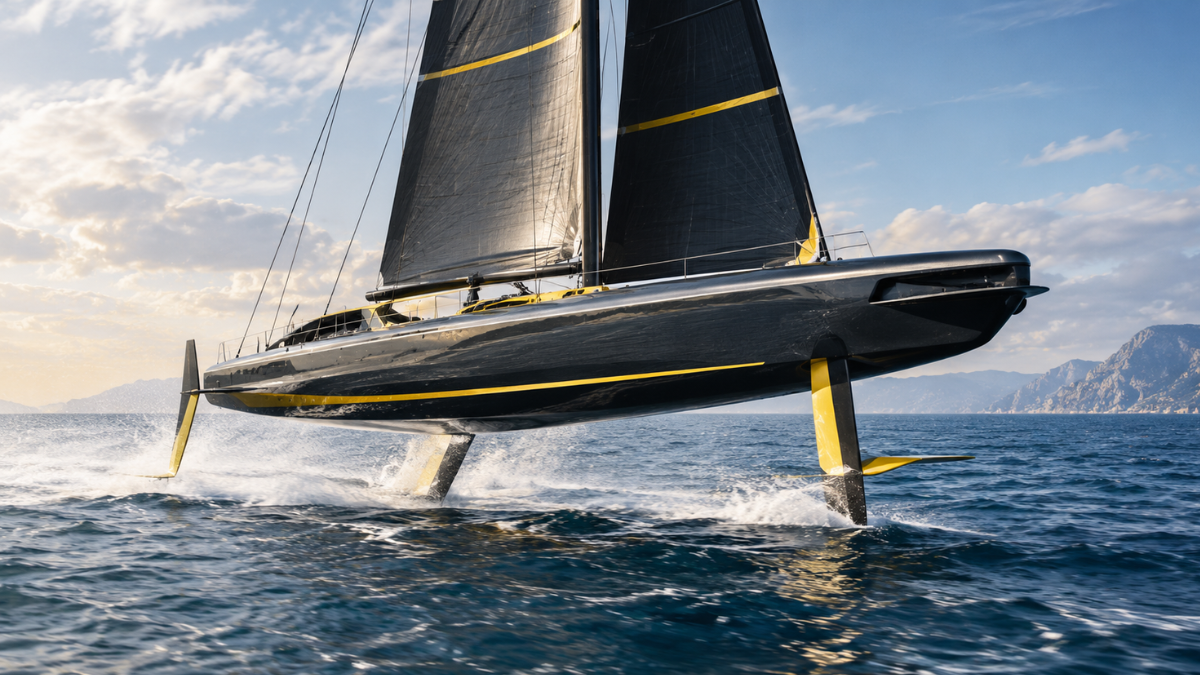
Ferrari is famous for high-performance sports cars and motorsport engineering, but its latest innovation takes that expertise beyond the road. The Ferrari Hypersail is a 100-foot ocean-racing yacht designed to lift its hull above the water using hydrofoils, while relying on advanced control systems and renewable energy technologies.
The project combines Ferrari’s experience in vehicle engineering with specialist yacht design. Rather than creating a conventional luxury yacht, the company is developing an experimental offshore racing platform intended to explore speed, efficiency, stability and energy management in demanding ocean conditions.
As of October 2026, recent reports say the yacht’s hull has been completed and its advanced systems are moving towards the next stages of development. Its launch is now expected in early 2027, followed by the testing needed to establish how the boat performs at sea.
Here are seven important technologies that make Ferrari Hypersail one of the most interesting projects at the intersection of automotive engineering and ocean racing.
1. What Is Ferrari Hypersail?
Ferrari Hypersail is a 100-foot, single-hull offshore racing yacht designed to use hydrofoils to reduce the amount of its hull in contact with the water. The project was officially announced in June 2025 as Ferrari expanded its engineering ambitions into ocean sailing.
The yacht was designed by French naval architect Guillaume Verdier, working with Ferrari engineers and specialist sailing experts. The project initially involved Italian sailor Giovanni Soldini; more recent design reporting identifies Enrico Voltolini as the project leader.
Its central idea is to combine the endurance required for ocean racing with the control systems, materials and performance-focused development methods associated with high-performance cars.
Ferrari has described Hypersail as an innovation and research platform rather than a new line of commercial luxury yachts. The company is interested in developing technologies that can benefit both marine engineering and its automotive work.
2. Hydrofoils Designed to Lift the Hull Above Water
One of the defining features of Ferrari Hypersail is its full-foiling concept. Hydrofoils are underwater wings that generate lift as a vessel moves forward. Under suitable conditions, that lift can raise much of the hull above the water, reducing drag.
This is important because a conventional boat must push water aside as it moves. When a foiling vessel lifts its hull, it can reduce some of the resistance associated with that movement. However, achieving stable flight over ocean waves is considerably more complicated than foiling in calmer conditions.
Hypersail is designed around three points of support during foiling:
- A lateral foil on the leeward side of the yacht.
- A foil associated with the rudder.
- A foil integrated into the canting keel.
These components must work together to manage lift, balance and direction. Their behaviour also depends on wind, speed, wave conditions and the boat’s position.
The design is intended to help Hypersail maintain a controlled foiling mode offshore. Its actual speed, efficiency and reliability will need to be established through sea trials.
3. An Innovative Canting Keel With an Integrated Foil
A canting keel is a keel that can pivot sideways to help counteract the force of the wind on a sailing yacht. By moving its ballast towards the windward side, the yacht can increase its resistance to heeling.
Ferrari Hypersail takes this concept further by integrating a foil into the keel assembly. The foil includes a movable flap that helps adjust lift and contributes to the boat’s balance.
This arrangement is an important part of the yacht’s three-point support concept. Instead of treating the keel only as a source of stability, the design uses it as part of the system that supports and controls the vessel while foiling.
The challenge is substantial: the keel, foil and their control mechanisms must withstand heavy loads while responding accurately to changing conditions. A solution that works well in one sea state may require different adjustments when wind or wave conditions change.
The integrated design is one of the project’s most distinctive engineering features, although its practical advantages must ultimately be demonstrated on the water.
4. Flight Control: The Technology That Helps Manage Foiling
A yacht travelling above the water needs more than powerful sails and carefully shaped foils. It also needs to maintain a suitable attitude as speed, wind and waves change.
Ferrari Hypersail uses an electronic architecture known as Flight Control to coordinate the systems involved in controlling its foiling mode. Recent reporting describes it as an automated system designed to analyse conditions and adjust the boat’s configuration.
The system works in conjunction with the foils, keel and rudder. These components affect the yacht’s lift, balance and direction, so adjustments to one part can influence the behaviour of the entire vessel.
Ferrari’s experience with electronic control systems and dynamic vehicle behaviour is relevant here. A high-performance car must continually respond to changing forces and road conditions; a foiling yacht faces its own complex set of forces, with the additional challenge of wind and moving water.
However, Flight Control does not eliminate the need for skilled sailors. Crew members still have to manage the sails, navigate, make tactical decisions and operate safely in changing ocean conditions.
The system is a major part of the concept, but its effectiveness can only be fully assessed after meaningful testing at sea.
5. Carbon Fibre and Titanium for Strength Without Excess Weight
Weight is a major consideration in both performance cars and racing yachts. Additional weight can affect acceleration, efficiency and handling, while insufficient structural strength can create serious risks under high loads.
Ferrari Hypersail uses advanced structural solutions, including combinations of carbon fibre and titanium in areas exposed to particularly demanding forces. Recent technical reporting has highlighted these materials around heavily loaded components, including parts of the foil structure.
Carbon fibre composites can provide high stiffness and strength relative to their weight. Titanium is valued for its strength and other properties that make it useful in demanding engineering applications.
Combining materials is not simply a matter of making every component as light as possible. Engineers must consider fatigue, load distribution, manufacturing precision, corrosion exposure and the forces generated by waves and foiling.
This is where automotive engineering can offer useful experience. Techniques for analysing structures, modelling loads and testing materials can inform the development of a yacht designed to operate for extended periods in difficult conditions.
The exact performance benefits will depend on the completed design and results from real-world trials.
6. Renewable Energy and an Ambitious Self-Sufficient Power System
Ferrari has presented Hypersail as a yacht designed to generate the energy it needs onboard rather than depending on a conventional combustion engine for its operating systems.
The planned energy architecture uses renewable sources, including solar and wind energy, alongside energy generated through the crew’s physical effort.
Solar panels are intended to provide a major share of the yacht’s electrical supply. Wind-based generation can provide another source, while a system described as winch-by-wire combines sail-handling activity with electricity generation.
In a winch-by-wire arrangement, crew members still work the lines, but their effort can also contribute to generating electricity. The yacht’s electrical systems and energy storage then have to balance supply and demand.
This is particularly challenging offshore. Electronic controls, navigation instruments and the systems that adjust the foils, keel and rudder all require reliable power. Solar generation can vary with weather and daylight, while energy demand can rise during demanding sailing conditions.
The aim is to operate without a fossil-fuel combustion generator, but the boat must still manage its energy carefully. Its ability to sustain that approach in real ocean conditions is one of the key questions the testing programme will need to answer.
7. Ferrari Hypersail’s Record-Breaking Ambitions
Hypersail is being developed for high-performance offshore sailing, with the Jules Verne Trophy record for the fastest circumnavigation of the world among the ambitions associated with the project.
That is a demanding objective. A successful round-the-world attempt requires not only speed but also reliability, careful route planning, suitable weather conditions, efficient energy use and a crew capable of working safely for long periods.
The yacht’s foiling system could potentially reduce drag in suitable conditions, while its automated controls and lightweight structure are intended to help manage performance. But these design goals do not guarantee a record.
As of October 2026, Hypersail should be described as a yacht under development, not a proven record-breaking vessel. Its launch and subsequent sea trials will be important milestones before its real-world capabilities can be judged.
Ferrari’s wider development timeline is also significant: the project is intended to evolve through testing and refinement rather than being considered finished as soon as the yacht enters the water.
When Will Ferrari Hypersail Launch?
Ferrari’s original June 2025 announcement anticipated a 2026 launch and initial sea trials. The timeline has since moved forward in newer reporting: October 2026 coverage says the hull’s painting and livery are complete, while the yacht’s appendages and control technology are progressing towards launch.
The latest reported target is the first quarter of 2027. A precise public launch date and verified sea-trial performance should not be assumed until confirmed by Ferrari or reliable subsequent reporting.
The distinction matters because completing the hull is not the same as completing every stage of testing. Before a yacht of this complexity can attempt demanding offshore racing, its systems must be integrated and assessed under real conditions.
What Ferrari Hypersail Could Mean for Automotive Technology
The most interesting aspect of Hypersail is not simply that Ferrari is building a boat. It is the opportunity to test ideas across two very different engineering environments.
High-performance cars and foiling yachts share several challenges: reducing unnecessary weight, managing energy, analysing structural loads and controlling complex systems as conditions change.
The transfer of ideas can work in both directions. Automotive simulation and control expertise may help the yacht, while lessons from renewable energy, lightweight structures and long-duration operation could inform future automotive research.
That does not mean every yacht technology will automatically appear in a Ferrari road car. Each application has its own safety, cost, regulatory and performance requirements. Instead, Hypersail offers a platform for exploring solutions that may be useful across different engineering fields.
For automotive enthusiasts, it is a reminder that innovation often develops when specialists from different industries work together.
Frequently Asked Questions
What is Ferrari Hypersail?
Ferrari Hypersail is a 100-foot foiling ocean-racing yacht project developed by Ferrari with specialist yacht designers and engineers. It is designed to lift much of its hull above the water in suitable sailing conditions.
Why is Ferrari building a sailing yacht?
Ferrari has presented Hypersail as an experimental research and development platform. The project explores how performance engineering, electronic control systems, lightweight materials and energy management can be applied to offshore sailing and potentially inform automotive research.
How does Ferrari Hypersail fly above the water?
Hydrofoils act like underwater wings and generate lift as the yacht moves. Hypersail’s design combines lateral foils, a foil associated with the rudder and a foil integrated into its canting keel to support and control its foiling mode.
Does Ferrari Hypersail have a combustion engine?
Ferrari’s stated design aims for onboard energy self-sufficiency using renewable sources and crew-generated energy, without a conventional fossil-fuel combustion generator. The yacht’s ability to sustain this system during real offshore operation will need to be assessed through testing.
When will Ferrari Hypersail launch?
Recent reports from October 2026 place the launch target in the first quarter of 2027. The exact date and sea-trial schedule should be confirmed through updated official announcements.
Has Ferrari Hypersail broken the Jules Verne Trophy record?
No verified record should be attributed to Hypersail at this stage. The project has ambitions associated with high-performance ocean racing and the Jules Verne Trophy, but the yacht still needs to be launched, tested and proven in real conditions.
Final Thoughts
Ferrari Hypersail brings together the worlds of high-performance automotive engineering and offshore sailing in a project built around foiling, automated control, advanced materials and renewable energy.
Its most important test will come when the yacht moves from construction and simulation to real ocean conditions. Until then, the technology is promising, but its ultimate speed, efficiency and reliability remain to be demonstrated.
For automotive enthusiasts, Hypersail is worth following because it shows how engineering knowledge can move beyond cars and contribute to new challenges in other industries.
Sources and further reading
- Ferrari’s official project announcement: https://www.ferrari.com/content/dam/ferrari-fcom/old/pdf/PressRelease_FerrariHypersail__25.06.25_ENG.pdf
- Sky Sport’s October 2026 report on the hull and Flight Control system: https://sport.sky.it/altri-sport/vela/2026/10/16/vela-ferrari-hypersail-barca-presentazione
- Gazzetta.it’s October 2026 report on the yacht’s construction and technology: https://www.gazzetta.it/vela/16-10-2026/ferrari-hypersail-scafo-completato-ecco-la-tecnologia-che-fara-volare-la-barca.shtml
- Financial Times coverage of Ferrari’s ocean-racing ambitions: https://www.ft.com/content/7adc83b1-f50c-4092-82ab-9290fa6c904b
Posts Widget
- 1

- 2

- 3

- 4

Pakistan’s Trusted Auto Parts & Automotive Tools
Copyright © 2026 PakGaari. All rights reserved.
